
Paver, Brick & Concrete Sealing in South Florida: Driveways, Patios & Pool Decks
South Florida outdoor surfaces work hard. Driveways carry vehicles every day, patios host family and guests, and pool decks face water and regular foot traffic. Pavers, brick and concrete can also collect dirt, organic buildup and stains that leave a property looking tired.
911 Property Services provides pressure cleaning and sealing for suitable paver, brick and concrete surfaces throughout Palm Beach and Martin Counties. Our work includes driveways, patios, pool decks, walkways and outdoor entertaining areas. Cleaning and sealing belong in the same conversation, but they are separate steps with different purposes.
See the Difference: Before and After Sealing
These photographs show a 911 Property Services brick driveway project after cleaning and after sealing. The sealed surface shows richer reds and warmer gold tones compared with the lighter, more matte appearance before sealing.
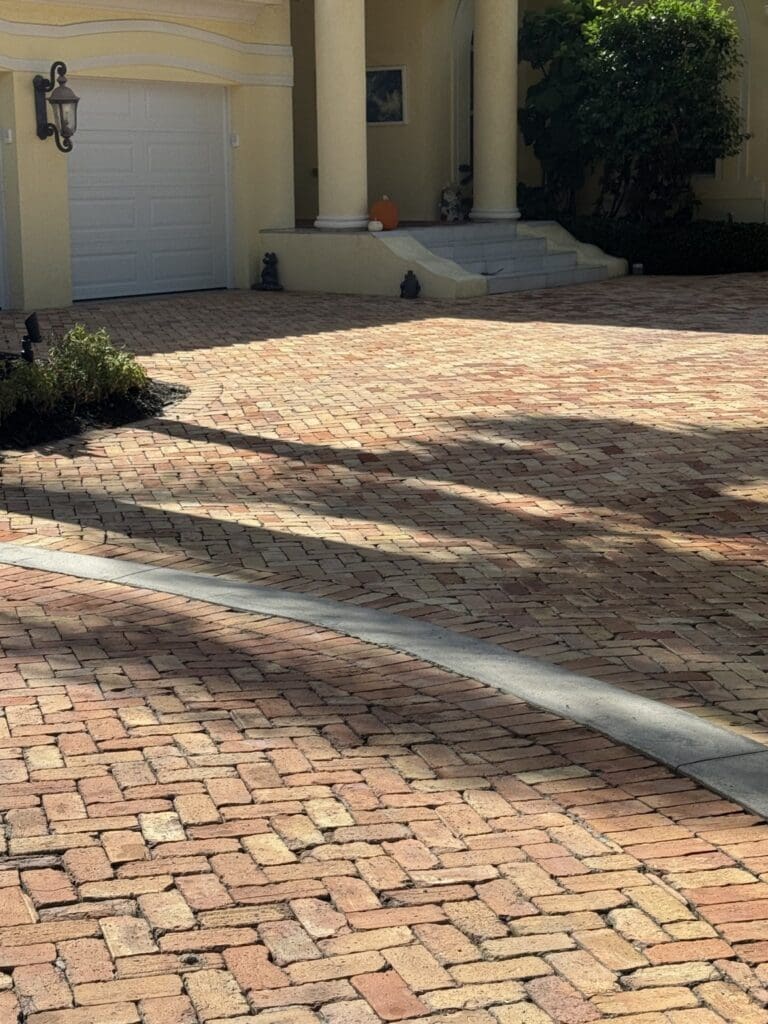
Cleaned brick, ready for the next stage.
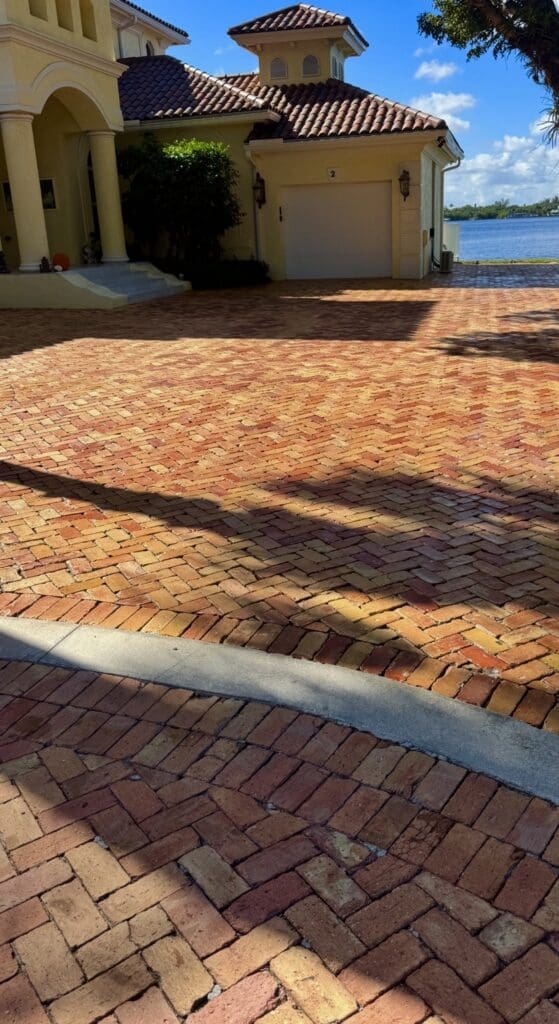
The completed driveway with enhanced brick color.
Original project photographs supplied by 911 Property Services. Lighting and camera angles differ. The appearance of a sealer varies with the surface and product selected.
What Is the Difference Between Cleaning and Sealing?
Cleaning removes accumulated dirt and other surface contamination using methods appropriate to the material. Sealing applies a compatible treatment after preparation to help protect the surface or enhance its appearance, depending on the product selected.
Some sealers help reduce water absorption; others are designed to resist particular stains or enhance color. Results depend on the material, its condition and the sealer. Sealing does not replace repairs, fix drainage or make a surface maintenance-free.
Paver, Brick and Concrete Sealing
Concrete pavers, clay brick and poured concrete can look similar from a distance, but they do not necessarily need the same treatment. Existing coatings, porosity and the intended use of the area all matter.
- Pavers: Surface preparation includes considering the condition of the pavers, joints and any previous sealer. Joint-sand work, when needed, should be included in the agreed scope.
- Brick: Clay brick needs a product approved for that material. A sealer intended for concrete pavers is not automatically suitable for brick.
- Concrete: Plain, stamped or previously coated concrete needs an assessment of the surface and compatibility before a product is selected.
A test area helps establish whether the proposed finish is suitable and whether the appearance meets the homeowner’s expectations.
Driveways, Patios and Pool Decks
Driveways need a treatment suitable for vehicle traffic. Oil marks, tire staining, existing coatings and the time needed before cars can return should be discussed before work begins.
Patios and walkways need a finish suited to their material, exposure and daily use. Furniture, planters and nearby surfaces also need to be considered when planning access and preparation.
Pool decks need particular attention to traction when wet. Product selection and any compatible traction additive should follow the manufacturer’s guidance. A glossy appearance should never be the only reason for choosing a coating.
Cleaning Comes First
These additional project photos show the contrast between cleaned and untreated brick paving. They document the cleaning stage only; the sealing comparison appears above.
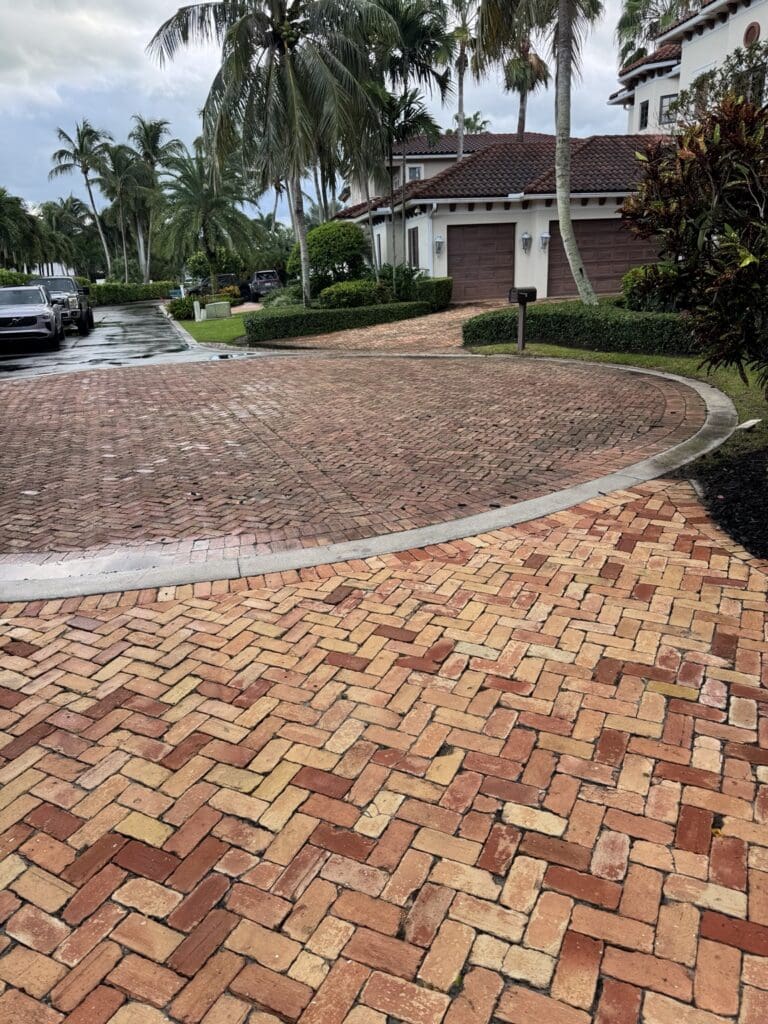
Visible contrast between treated and untreated areas.
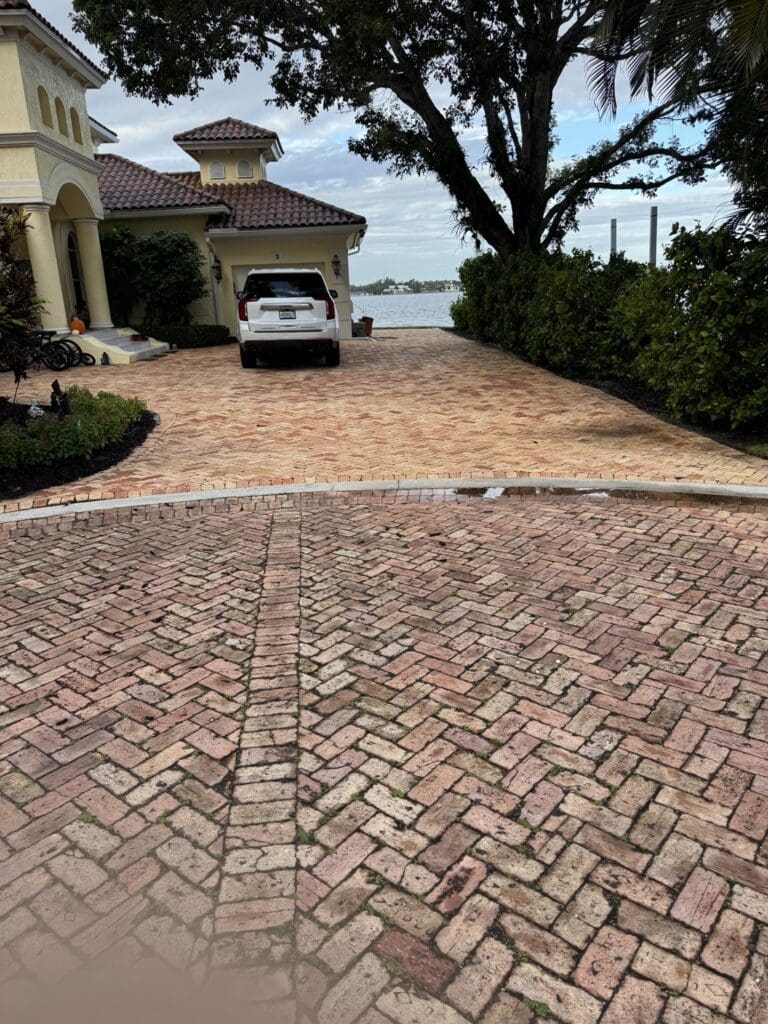
Cleaning results before any sealing shown in this pair.
Preparation Makes the Difference
Applying sealer over dirt, incompatible old coatings or unsuitable moisture conditions can compromise the result. Our pressure washing and exterior cleaning guide explains why cleaning methods should be matched to the surface.
A sealing project should follow a clear sequence:
- Assess the material, visible condition, drainage and existing coatings.
- Agree on cleaning, stain treatment, repairs and any joint-sand work included in the quote.
- Clean using an appropriate method and protect surrounding areas.
- Allow the surface and weather conditions to meet the selected product’s requirements.
- Confirm suitability and appearance with a test area.
- Apply according to the manufacturer’s coverage and coating instructions.
- Allow the required curing period before furniture, foot traffic or vehicles return.
Natural Appearance or Color Enhancement?
Some sealers preserve a more natural appearance. Others deepen color or leave a more noticeable sheen. Not every finish is available or appropriate for every material.
Before choosing, consider how the area looks when dry and wet, how it is used, and its maintenance needs. If the surface was sealed previously, compatibility should be checked before another coating is applied.
How Often Should Surfaces Be Resealed?
There is no single schedule for every property. Traffic, sun exposure, drainage, material, previous preparation and the product used all affect performance. Follow the selected manufacturer’s maintenance guidance and assess the surface before deciding it needs another coat.
Routine cleaning remains necessary after sealing. Prompt attention to spills and suitable cleaning methods can help maintain the finish.
Request a Cleaning and Sealing Quote
911 Property Services serves Jupiter, Juno Beach, North Palm Beach, Palm Beach Gardens, Tequesta and surrounding communities in Palm Beach and Martin Counties. Tell us the surface material, approximate area, whether it has been sealed before and the finish you would like.
Explore our exterior cleaning, pressure washing and sealing services, or request a property-specific quote. Call Richard at 561-389-4009 or Tom at 561-308-8529.
Frequently Asked Questions
Can sealing make pavers look new?
Cleaning and a suitable sealer may improve their appearance, but cannot reverse all wear, remove every stain or repair damaged pavers. Discuss realistic results before work begins.
Can you clean and seal on the same day?
That depends on the product, surface moisture and weather. Application should follow the selected sealer’s requirements rather than a guaranteed same-day schedule.
Does sealing prevent all weeds or algae?
No. Sealing is not a guarantee against weeds, algae or future staining. Ongoing maintenance is still needed.
