
Mold in South Florida Homes: Types, Health Risks and Why Weekly Home Watch Matters
South Florida’s heat, humidity and heavy rainfall make moisture management essential. At 911 Property Services LLC, one of the most frequent air-conditioning problems we’ve encountered while providing Home Watch services is a clogged condensate drain line. When a drain backs up, a properly functioning safety float switch may shut down the AC. In an unattended home, rising indoor humidity can contribute to conditions favorable to mold growth.
Our owner-operated weekly Home Watch and property oversight services help seasonal homeowners in Jupiter, Juno Beach, North Palm Beach, Palm Beach Gardens, Tequesta and throughout Palm Beach and Martin Counties monitor observable property conditions and coordinate appropriate follow-up.
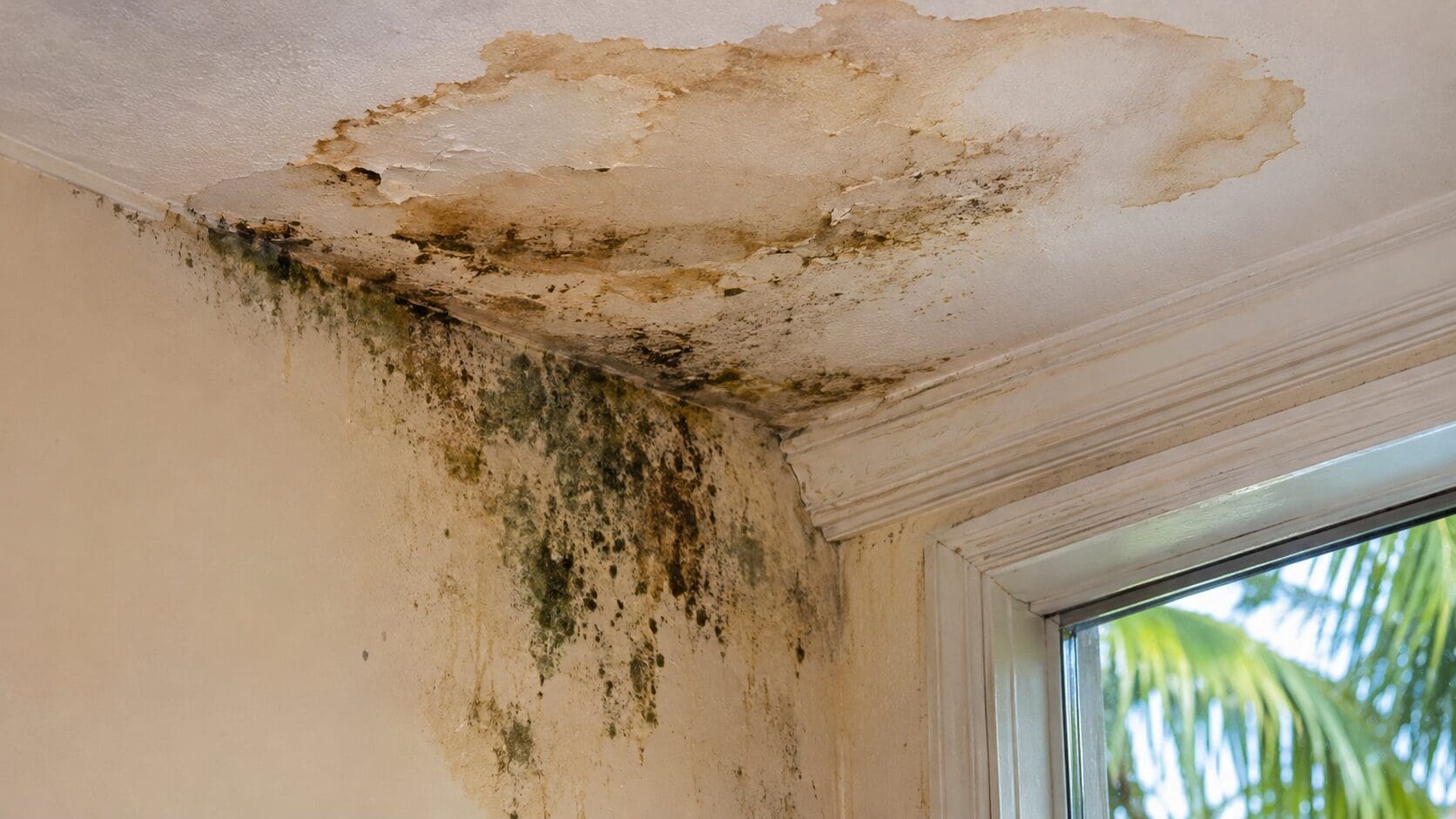
Is Mold Present in Almost Every South Florida Home?
Mold spores are naturally present outdoors and can enter buildings through openings, ventilation and everyday activity. In Florida, mold is common on soil, leaves, plants and damp outdoor surfaces. No home can be expected to be completely free of microscopic mold spores. But the presence of spores is not the same as active indoor mold growth. The goal is to prevent persistent moisture and unwanted mold colonies indoors.
Common Types of Mold in Homes
Cladosporium
Cladosporium occurs indoors and outdoors and may grow on damp surfaces or materials. It can trigger allergic symptoms in susceptible people.
Aspergillus
Aspergillus is a widespread group of molds. Some species can cause allergic reactions, and certain species can cause serious infections in people with weakened immune systems or particular lung conditions.
Penicillium
Some Penicillium species grow on damp building materials, fabrics and furnishings. Exposure may contribute to allergy symptoms in sensitive individuals.
Alternaria
Alternaria is common outdoors and may occur in damp indoor areas. It is an allergen that can aggravate asthma or allergies.
Stachybotrys chartarum, Sometimes Called “Black Mold”
Stachybotrys chartarum is associated with chronically damp cellulose-containing materials. The term “toxic black mold” can be misleading: mold color alone does not identify the species or determine the health risk. Unwanted indoor mold growth should be addressed regardless of color.
Can Mold Begin Growing in 24–48 Hours?
Yes, under favorable conditions, mold can begin growing on damp materials within 24–48 hours. The U.S. Environmental Protection Agency recommends drying wet areas and materials within this period to help prevent mold growth. This is not a guarantee that every leak or AC shutdown will cause mold within two days; moisture level, temperature, material and exposure time all matter.
Why Air-Conditioning Failures Are Especially Concerning
Air conditioners remove both heat and moisture from indoor air. When cooling stops in a closed South Florida home, indoor temperature and relative humidity may rise. A separate leak or existing damp material can increase the risk. Regular HVAC servicing, suitable condensate overflow protection, smart thermostat humidity alerts and leak sensors can help reduce risk between visits.
The Number One AC Problem We’ve Encountered During Home Watch: Condensate Drain Clogs
In our experience providing Home Watch services, clogged AC condensate drains have been the most common AC-related problem we’ve encountered. South Florida systems often run for extended periods, removing moisture that must drain away safely.
Over time, a jelly-like buildup may develop inside the condensate piping. HVAC professionals commonly call it biofilm or white slime. The term zooglea (also spelled zoogloea) is sometimes used, while technicians may informally call it “drain snot” or “gunk.” The exact organisms and composition vary; the appearance alone does not identify a specific organism.
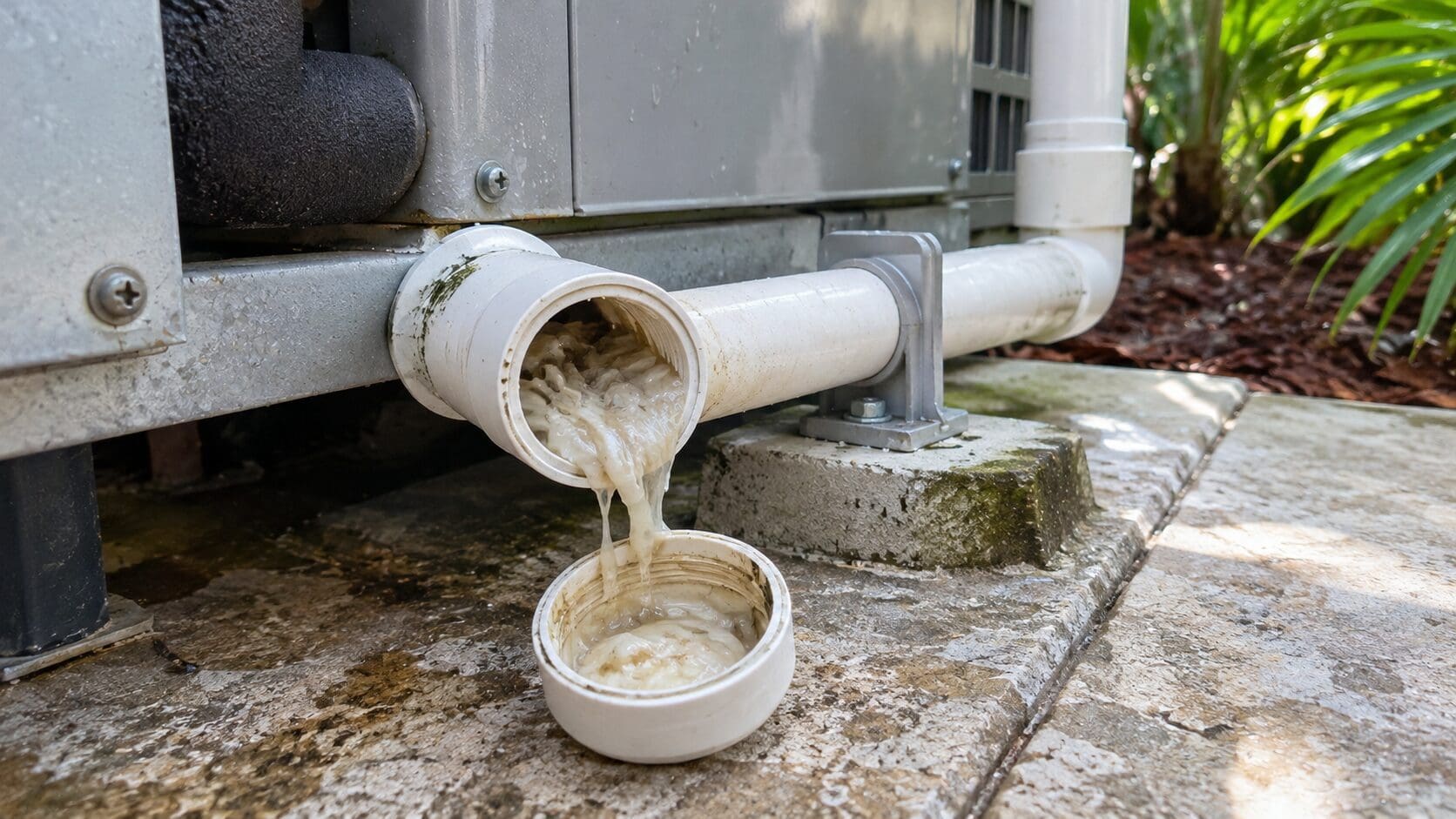
When this material restricts or blocks the drain, condensate can back up. On systems with a working overflow safety switch, the air conditioner may shut off to reduce the risk of water damage. That shutdown can leave a seasonal home without cooling or humidity control. If overflow protection is absent or fails, backed-up water may instead damage ceilings, walls, floors or cabinetry.
That is why 911 recommends weekly Home Watch visits rather than monthly checks, along with professional condensate-drain maintenance and appropriate monitoring devices. During visits, we look for observable temperature, humidity, water and AC concerns within the agreed service scope. A weekly visit cannot guarantee detection of hidden problems or prevent damage developing between checks.
Health Risks of Indoor Mold
Mold exposure may cause nasal congestion, sneezing, coughing, eye irritation, wheezing or worsening asthma in susceptible people. People with allergies, asthma, chronic lung conditions or weakened immune systems may face greater risks. Certain molds can cause infections in especially vulnerable individuals. Health effects vary, and mold cannot be diagnosed or classified as dangerous by color or a photograph. Consult a healthcare professional about persistent symptoms or elevated personal risk.
Where Homeowners Should Watch for Moisture
- Air handlers, condensate pans and accessible drain areas
- Ceilings and walls beneath roof leaks
- Windows and doors exposed to wind-driven rain
- Under sinks, around toilets and behind appliances
- Water heaters, laundry rooms and utility closets
- Bathrooms, cabinets and areas with poor ventilation
- Previously wet drywall, flooring and insulation
Persistent musty odors, damp materials, water stains, bubbling paint and visible growth warrant investigation.
What to Do If You Discover Mold
Correct the moisture source first. Small amounts of growth on suitable hard surfaces may sometimes be cleaned according to public-health guidance. Extensive, recurring, concealed or suspected contaminated materials may need professional evaluation and remediation. Florida regulates certain mold assessment and remediation activities. Avoid painting over mold or installing new finishes on damp materials.
How 911 Property Services Helps After Moisture or Mold Damage
911 provides weekly Home Watch, owner-approved vendor coordination and renovation project management. After appropriate drying and remediation by qualified specialists, our interior and exterior painting and renovation services can help restore drywall, ceilings, trim and finishes. We also offer pressure washing and roof cleaning and driveway, patio and paver cleaning and sealing for suitable outdoor surfaces. These cleaning services are not indoor mold remediation or repairs to leaking roofs.
Why Weekly Home Watch Matters for Seasonal Residents
A month is a long time for an unattended South Florida home. A condensate drain can clog, a float switch can shut down the AC, a plumbing connection can leak or a storm can expose a roof or window defect. More frequent visual visits create additional opportunities to identify and report observable issues. For protection between visits, consider a smart thermostat with humidity alerts, water sensors and regular professional HVAC service.
Our current weekly Home Watch rates are $75 for houses and $50 for condominiums, subject to the agreed scope.
Frequently Asked Questions
Does every Florida home have mold?
Microscopic mold spores are normally present indoors and outdoors. That does not mean every home has an active indoor mold problem.
Can mold start growing within 48 hours?
Yes, on damp materials under favorable conditions. Prompt drying and correction of leaks are important.
Is all black mold dangerous?
Color alone does not establish mold species or health risk. Unwanted indoor growth should be addressed.
Why does a clogged AC condensate drain shut down cooling?
On systems equipped with a functioning safety float switch, backed-up condensate can trigger the switch to stop cooling and help prevent overflow.
Does 911 perform mold testing or remediation?
911 provides property oversight and coordinates owner-approved work. Specialized mold assessment and remediation should be handled by appropriately qualified professionals.
Can weekly Home Watch prevent all mold problems?
No. Weekly checks may help identify visible concerns sooner but cannot detect every hidden issue or guarantee prevention.
Protect Your South Florida Home with 911 Property Services
911 Property Services LLC serves Jupiter, Juno Beach, North Palm Beach, Palm Beach Gardens, Tequesta, Stuart and communities throughout Palm Beach and Martin Counties. We help homeowners with weekly property oversight, renovations, painting and exterior maintenance.
Contact us about weekly Home Watch or property repairs. Richard: (561) 389-4009. Tom: (561) 308-8529.
Further reading: U.S. EPA: A Brief Guide to Mold, Moisture and Your Home; CDC: Mold and Your Health.
