
How to Manage Home Renovation Projects Remotely in South Florida
Renovating your South Florida home while you are out of town can be convenient. A kitchen update, bathroom renovation, flooring replacement, or painting project can move forward while you are at your primary residence. But distance makes it harder to check progress, answer questions, and catch mistakes before they become expensive to correct.
Not having an eye on construction can cost you a lot of money. Building happens in stages. If the work moves two, three, or four steps ahead before someone notices a mistake in an earlier stage, correcting it may require removing and replacing work that has already been completed.
The key to managing a renovation remotely is to decide in advance how each stage will be checked, how the work will be documented, who can make decisions, and how you will verify completion. For seasonal homeowners in Palm Beach and Martin Counties, a clear plan and a dependable local contact can make the process easier to follow.
1. Define the work before anyone starts
Begin with a written scope that describes each area being renovated, the work included, and the work excluded. “Update the bathroom” leaves too much open to interpretation. Identify the fixtures, tile, cabinetry, lighting, paint, and finishing details that belong in the project.
Record product names, model numbers, colors, dimensions, and placement wherever possible. Keep approved drawings and selections in a shared folder. If a product becomes unavailable, require approval of its replacement before it is ordered or installed.
Also agree on how the home will be protected: which furniture stays, where materials may be stored, how dust will be contained, and who handles debris removal and final cleaning.
2. Choose your contractor and define the local contact’s role
Compare written estimates covering the same scope. Check references, applicable licensing, and insurance before hiring. Your written agreement should identify the contractor, expected schedule, payment terms, and responsibility for necessary permits.
If someone will visit the property on your behalf, put that arrangement in writing too. A local contact may provide access, photograph visible progress, report concerns, and relay questions. Decide whether that person has any spending authority or must obtain your approval for every change.
These visits do not replace the contractor’s supervision, required inspections, or specialist evaluations. Keeping those responsibilities clear helps prevent misunderstandings about who is checking what.
3. Build the schedule around deliveries and decisions
Ask for a schedule with meaningful stages rather than a single completion date. Depending on the project, those stages might include demolition, rough work, inspections, installation, finishing, and the final walkthrough.
Identify decisions you must make before each stage begins. A delayed cabinet selection or unanswered question about tile placement can hold up other work. Agree on how urgent questions will reach you and when you are normally available to respond.
For a condo, confirm building access procedures, work hours, elevator reservations, and association approvals with management. Discuss material storage, weather protection, and potential delivery delays before setting your return date.
4. Check each stage before it is covered
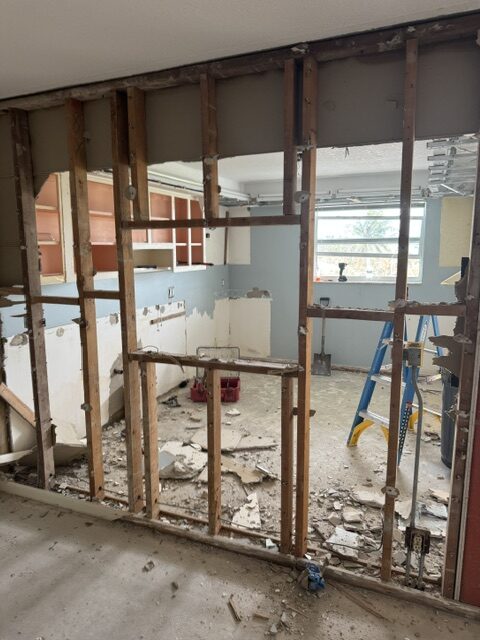
A progress update should do more than confirm that construction is moving forward. It should help you identify questions or problems while the relevant work is still accessible. Agree with your contractor on checkpoints before work is concealed or the next stage makes a correction harder.
For example, a question about plumbing placement is easier to address before walls are closed and tile or cabinetry is installed. If it is discovered afterward, the correction may involve opening the wall, removing finished materials, making the repair, and restoring those finishes. One earlier mistake can affect several later stages.
Arrange for the appropriate person to review the work at each checkpoint. A local contact can photograph visible conditions and flag concerns, while technical work may need review by a qualified professional and any required inspection. Photos and video calls support that process, but they do not replace technical inspections.
Ask the contractor to identify when each checkpoint will occur and give you time to resolve outstanding questions before proceeding. Record concerns, the proposed correction, and confirmation that the issue was addressed. The purpose is to catch problems before additional work makes them more costly to fix.
5. Require useful photo updates
A photograph of a finished room tells you less than a sequence showing what changed. Request dated photographs labeled by room or task, including both wide views and close-ups of details you need to approve.
Agree on a regular update that answers four questions:
- What work was completed?
- What work is planned next?
- What problems or delays have appeared?
- What decisions are needed from the owner?
Use video calls for questions that are difficult to explain in still photographs. A local contact can show you a room layout or a visible concern, while the contractor explains the proposed solution. Keep the resulting decision in writing so everyone has the same record.
6. Approve changes before the extra work begins
Renovations sometimes reveal conditions that were hidden before demolition. When that happens, ask for photographs, an explanation, and a written proposal describing the additional work, its cost, and its effect on the schedule.
Keep a simple change log with the date, description, price, and your approval. For example, if damaged material is found behind a bathroom vanity, document the proposed repair before authorizing it. A phone conversation should be followed by written confirmation.
Set aside room in your budget for unexpected work. Keep that reserve separate from optional upgrades so you can see how much flexibility remains.
7. Connect payments to documented progress
Agree on payment stages in the contract and keep invoices, approvals, and receipts together. Avoid paying the entire project price upfront. The Federal Trade Commission recommends tying progress payments to defined completed work and withholding final payment until the work is complete and satisfactory.
When you are away, ask what evidence supports each payment request. That may include a contractor update, dated photographs, delivery records, or an inspection record where relevant. Photographs alone cannot establish the quality of hidden work, so decide when additional verification is needed.
8. Plan for an occupied or vacant home
Agree on keys or access codes, authorized visitors, locking procedures, and who to contact if a leak or other urgent problem occurs. Tell the contractor which areas are off limits and how valuables and personal belongings should be protected.
If the home will be vacant, include appropriate property checks during the renovation. Coordinate air-conditioning operation, water use, and any planned utility shutdowns. Make sure someone knows whether a system was intentionally turned off or needs attention.
9. Finish with a walkthrough and a written punch list
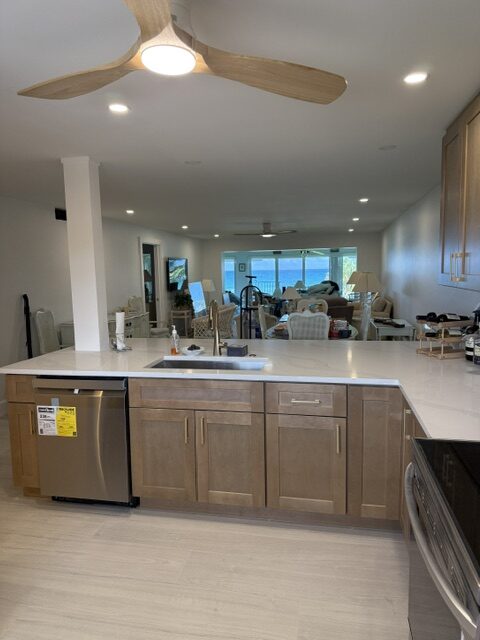
Before treating the project as complete, arrange a walkthrough in person or by video with appropriate local support. Compare the results with the agreed scope and approved changes. List unfinished items or visible defects, assign responsibility, and agree on completion dates.
Collect warranties, product information, care instructions, final invoices, and applicable permit or inspection records. Confirm that debris has been removed, the home has been cleaned, and access arrangements have been reset as agreed.
Frequently asked questions
Can I renovate my home without being there?
Yes, many decisions can be managed remotely when you have a detailed scope, reliable communication, and appropriate local support. Consider being present for decisions that are difficult to assess by video, such as comparing finish samples or reviewing a major layout change.
How often should I receive updates?
Agree on a regular schedule that fits the project. A weekly summary may work during routine progress, with additional updates at milestones and immediate contact when a decision or urgent concern arises.
Who should approve additional costs?
You should approve them unless you have explicitly delegated that authority. Define any spending limit and the circumstances in which your local contact may act.
Planning a renovation while you are away
Explore our renovation services in Palm Beach and Martin Counties and completed project transformations.
911 Property Services LLC brings together Property Management & Home Watch, Renovations, and Exterior Cleaning for homeowners in Palm Beach and Martin Counties. If you are considering a project while out of town, contact us to discuss the work and the local support you need.
Contact 911 Property Services or call 561-389-4009.
Consumer reference: Federal Trade Commission — Hiring a Contractor.
